Sunday, September 19, 2010

A new project - a Santa costume - part 1 - pattern development

Yes I'm still alive, and a bit stupid since I've added more projects to my "to do list"

Over the past week, I've attended a few callouts for fire and rescue, worked 5 days, and also attended a course (pump operations)
In the "spare" time I attended training for vollies, salvaged the shafting from 7 gas struts (see my earlier shed tip about that), and commenced this new project.

The Santa suit...
One of the fundraising activties carried out by the volunteer Fire and Rescue involves hiring out a "Santa" for local parties. Santa shows up in a 1950 Bedford fire truck (with original lights and siren) and is escorted into the party by a VFRS member... the kids love it, and it's fun work.
The santa costume worn by the volunteer is one of a few, some privately owned, and a couple owned by the brigade - after using one last year which was getting a little long in the tooth, I decided to make my own.

I bought the fabric through Spotlight, and made the pattern up myself.

This posting will discuss the development of the pattern.

Santa's outfit comprises a jacket, a pair of pants, a hat, and some trimmings (not to mention a jolly old fat guy in the middle)
This project will make the jacket (with internal pocket for gloves), 2 pairs of pants, a couple of hats, a belt, and maybe some spats (overboots)

I started the pattern development by grabbing some cardboard wrappers from whiteboards we bought at work - the large sheets of thin cardboard became my primary working material, and also protected the fabric from picking up stains from the trestle table I set up to work from.

I laid out my turnout coat on the cardboard and traced out the key dimensions of the arms, shoulder, waist, and inner/outer seams of the pants.


Figure 1 - using my turnout coat to start the tracing of dimensions


Figure 2. Adjusted tracing of the arm panel, and leg panel


Since I don't have any of that wide thin paper used for making patterns, and I'm not going to cut up my meagre stash of interfacing for a pattern I'll only use once in a blue moon, I decided to fall back on my old trick of using plastic sheet for the pattern material. (I have a stash of tranlucent builder's plastic used for covering gear during cyclones)

The plastic was laid over the tracing, and drawn through with a permanent marker (sharpie, Nikko, whatever your local term is). During this tracing, I made adjustments to the dimensions for cutting/ seam alowance, and changed the cut of the jacket to a more "universal" fit.


Figure 3. Tracing jacket back panel on to translucent plastic

The adjustments made to the pattern included making places for folding the fabric when cutting, and rearranging the seams for joining the arms so they had a natural fit when reaching.


Figure 4. marking on the arm panel plastic to show cuts, direction of fur lay, and number of panels.

Since I was planning on using a crushed velour for the main suit fabric, I had to mark on the lay of the fur (direction) so it looked proper when assembled.


Figure 5. Pants panel patterns.

The last part of the pattern work at this stage was to capture the notes regarding how the suit was to look and go together. Figure 6 shows the notes made regarding the fit of the jacket, placement of fur trim, and trimmings such as pockets and belt loops.


Figure 6. Pattern notes

The next installments will cover the making of the jacket, and belt - hopefully within the next 7 days I'll get the suit finished, then I'll get the documentation done.

Friday, September 10, 2010

Jeanie's Bottle

I know, I know... I promised myself I'd keep this up to date, and regularly updated... plans of mice and men. Lots of things to blame, but ultimately it rests with me to update this record more often.
Over the past month I've probably spent a whopping total of 12 hours in the shed, and 4 of those hours was for someone else's benefit...

To partially redeem myself from the lack of updates, here is the documentation of a project I did 18 months ago (or so)

My wife is a fan of the TV show "I Dream of Jeannie".. for those with more money than I, you can purchase reproductions of the Jeannie bottle... I didn't have the money to spare so I looked at making one for my wife.

I started with some ceramic blanks purchased through Ebay - the original bottle was a glass bottle (Jim Beam 1969) modified and painted up by the studio, then after the success of the show, Jim Beam issued a regular run of the glass bottles for collectors - they go for around $80-100 USD on Ebay... the ceramic blanks cost around $25-35 USD each.


Figure 1. Ceramic bottle blanks

The blanks arrived (after some hiccups with post) and I primed and sanded them several times using automotive spray primer, and 600-800 wet and dry paper.


F
Figure 2. Primed bottles in box

The bottles were stored in a cardboard box whenever the paint was drying, or not being worked on.. partly to prevent dust settling on the paint, but also to prevent the bottles from being seen by the recipient. Typically whenever I make a present for my wife (or children) I will make it in secret, and only give it to them once it's completed.

After suitable layers of primer and sanding, the bottle was spray painted with 2 coats of cheap gold spraypaint (for base colour), then 3 layers of metallic gold paint. The final coats of gold were supposed to be able to give me a polished gold finish - it came out more like satin over brass, but that was OK... the "original" bottle would have been enamel over brass, and that was the effect I was trying to achieve.

Then started the painting of the colours - I started with some thin coats of a translucent purple so the gold/brass could come through, then added opaque detailing.

 Figure 3. Bottom of bottle showing base "gold" coat under translucent colouring.

My guide to colours and placement was a number of photos taken from the web, and a $5 painting/template guide I purchased on Ebay - Apparently there are about 5-6 different bottles shown on the show (Jeannie - Season 1, Jeannie -  the rest of the seasons, then other characters) This paint scheme is the "Jeannie - Season 2 onwards" colouring.

 Figure 4. Colours applied according to the painting guide

Adding the detail was painstaking at best. I've never used brushes so fine, and I never realised how much my hands shake when doing this kind of work. I had to rub back the work here and there, or paint over the occasional error, but generally it came out OK.

Once completed (or as close as I dared) I then started applying coat after coat of clear decoupage varnish over the entire thing to seal it all, and to add some slight gloss to the finish.


Figure 5. Varnish drying on finished bottle.

Once completed I wrapped them up for a Christmas gift. Below is the photo she took after unwrapping them. Everything we own is photographed for insurance purposes, and typically on our kitchen table.

Figure 6. Finished bottles as unwrapped.

One day I'll figure out how to make and fit a Barbara Eden in the bottles, but until then, I'll continue working on making my own (and my wife's) wishes come true by hard work instead of a "blinky head nod".

The paints were predominantly "Jo Sonia" glass paint, and folk art paint, and the spray paints were those left over from model rocketry.
Hours to "build" was in the order of 50-60 hours of work, plus about the same again waiting for paint/ varnish to dry.


Projects coming up:
MOT spotwelders, indicator stand repairs, taper turning attachment construction, lathe stand/motor construction just to name a few.

Sunday, August 22, 2010

Shed tips - free shim steel, and parallels

just another post to prove I'm alive, and trying to live up to my commitment to publish up the things I find useful, hoping someone else finds them useful.

Another "free" tip - shim steel
The anti-theft widgets I find inside PC software, DVDs and other packages often looks like a small rectangle. Inside is normally 3 pieces of incredibly thin steel - suitable for shimming tool bits up to 1/4" wide.
After several years of cutting these things open, only to fight with the sticky tape inside, this is the easiest way I've found to open the widget.

Figure 1 - the "unopened" widget

Using a sharp knife, slice the case near the bottom flange


Figure 2 - opening the widget

Remove the strips which you can easily - there may be one at the bottom under another layer of sticky tape - leave it at this stage


Figure 3 - the removed pieces, and one still in the case (under tape)

Cut the end off the rectangular plastic, as close to the end as possible

Figure 4 - sliced tape so the last piece can be retrieved

Insert the point of the blade between  the tape and the shim, and then slice back into the tape to cut the top off for at least 1/4".
Remove the remaining shim, discard the rubbish.

Result - Three pieces of shim, without any glue residue, or creases.

Bonus Tip  - "free" parallels
 an oldie but a goodie
Salvaged bearing races make good parallels, particularly for packing on the mill or lathe.
I took the time to dismantle a stash of saved bearings which were not worth saving (sand in the races)
Someone suggested drilling out the rivets holding the cage together - easier said than done, and it cost me a 4mm HSS drill - not again.


Figure 5 - old bearings too rough for use - destined to be dismantled

What I did was use on of my punches to drive the cage towards one side (punched in the gap between 2 balls) so the cage was deformed to the other side, then flipped the bearing and struck it back - I repeated this about 2 times and the cage broke at the point of the flexing. Using the point of the punch, I levered the cage material up, and then started winding it around the points of some pliers - most of the time the metal tore at the rivets, sometimes it broke, and all I'd do is commence from the other side and eventually all the cage was removed.
Then it was simply a case of pushing the balls all to one point in the races, and the inner race was able to be persuaded into the side without balls to drop away freely.


Figure 6 - a collection of free parallels for packing on the lathe.

Each bearing yielded 2 races with perfectly parallel sides, and a number of ball bearings which get filed away for use in detents, etc.

Speaking of detents - I pick up old disposable cigarette lighters whenever I'm out walking the dog - people are forever dropping them on the streets when they run out, or become damaged, The mainspring (the one pushing the flint up) is the perfect size for making/ replacing small detent springs (and extractor springs for rimfire bolts) - just another excuse to bring home junk, then pull it apart and file the parts.

What's on the horizon?
Webpage wise - I'll push to continue reviewing and recommending books - I can do that with little to no shed time.
Shed wise - Added 2 more projects to the "To Do" list (the "do to" list is at 12 major projects, and 23 minor projects and counting) - first is a couple of MOT spot welders (wound the first transformer last weekend), the second is building a electronics device to semi automate gear cutting... there are commercial offerings out there which do this, but the ulterior motive in this is getting my microprocessing skills back - I'm an Electrical/ Electronics engineer by training, but I spend more of my leisure time doing mechanical fitting - the irony has not escaped many people, especially myself.

Monday, August 9, 2010

Scrounging up materials - tips, etc

I am alive – I’ve just been burning the candle at each end, the middle, and a few other places.  Mostly work demands due to a sudden change in my shifts, but one thing upon another and I haven’t had as much time, or energy, to sit down and update this site.

I did get to do some cleaning in the shed on the weekend just gone, and as part of that I  photographed these two useful tips.

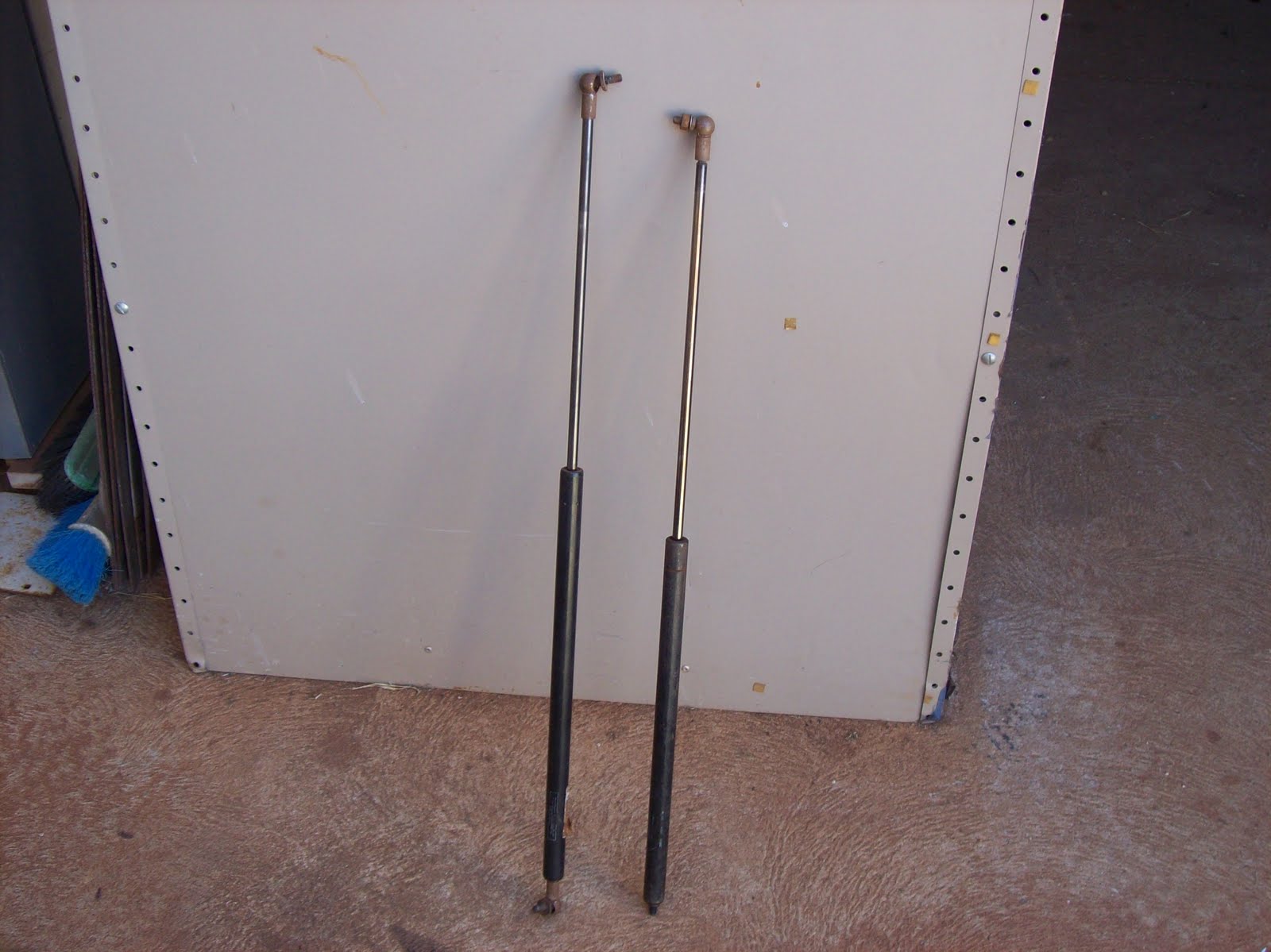
Firstly I need some STRONG steel rod for a couple of upcoming projects. One source of high tensile rod is the rod in a gas strut. I always keep my eyes open for any of these being tossed out, and I opened another 2 on the weekend in front of the camera. NOTE: opening these can be dangerous – I take precautions, but don’t blame me if you get hurt doing this!!!


Figure 1. Gas struts as recovered from being tossed out

The cylinder is filled with pressurized gas and oil. Near the end where the rod comes out there is some crimping which acts like a seal/ travel stop. I dress in appropriate PPE ("Personal Protective Equipment - in this case - ear-muffs, face-shield, leather apron) and work with the grinder and cut area pointed away from me. The first longitudinal cut in that area will suddenly release the gas and oil – I point that in a safe direction and let it vent out. Then once vented, I cut 3 or 4 longitudinal cuts for about 20-30mm above the crimped line. This allows me to remove the rod with it’s piston/ seals captive on the end.


Figure 2. Longitudinal cuts through crimped area to allow piston and seals to be pulled out of cylinder

I then grind off the peened over section of rod, and remove the piston/ seals from the rod.


Figure 3. Showing the peened end of the rod in the piston

The result is a strong, straight length of high tensile steel which has a polished surface. I now have 4 of these rods, one will be used to make the mast/pillar for the magnetic DTI base, another for my upcoming taper turner project, and the other 2 (matched pair) will be set aside as candidates for a Z axis slide in my CNC mill project. The photo below shows the 2 recovered rods on the RHS of the grinder.


Figure 4. Salvaged high tensile steel rods.


A useful tip I picked up from one of the contract firms I saw at a worksite…
We all have had a retractable steel tape measure break on us from time to time, I used to throw them out when I realized I “never get around to fixing them” – Not anymore.


Figure 5. Broken 8m tape measure


Instead I now open them up carefully

Using some heavy duty scissors (good tin-snips will do here as well) I carefully cut the measuring tape into useful pieces

Figure 6. Opened tape measure and snips

Since Oz is a metric country, most tape measures will have meters (with or with out imperial markings on the other side) so I cut the tape on the multiples of 1 meter.

Figure 7. Tape cut on meter markings

The resulting pieces are used as “disposable” yard sticks – useful for taking to messy places, using at the welding table, etc.

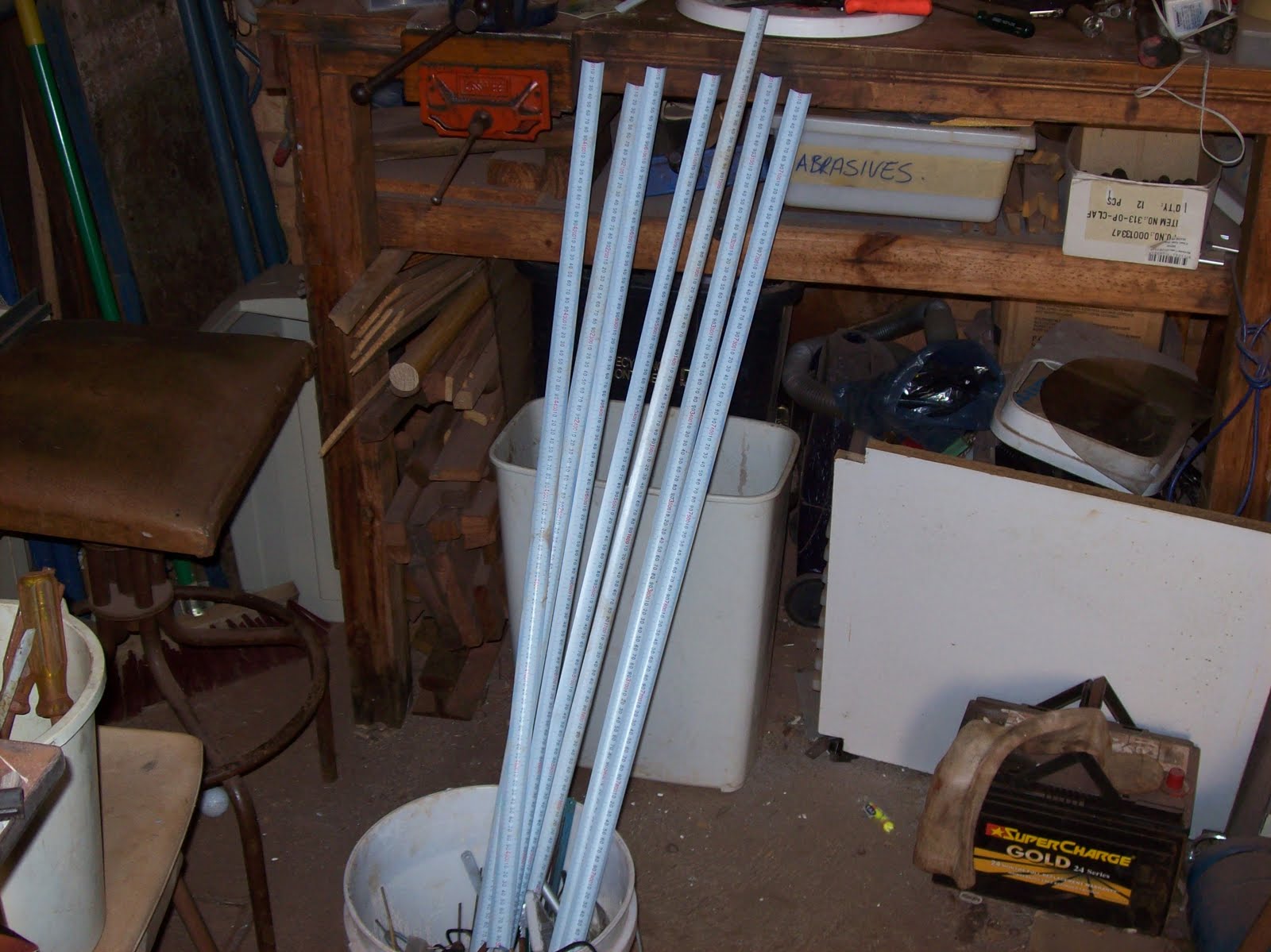
Figure 8. Seven 1m "yard sticks" made from one broken tape measure

I keep a stash of them threaded in the frame of the shed door – always there ready for use whenever I need a ruler for measuring something.


Figure 9. About 15 yard sticks threaded in the door frame of the shed.


I have 2 broken tape measures I haven’t cut up yet “in storage” for my CNC mill – these will be affixed on the sides of the axes for quick positioning/ verification under jog/ MPG control.

If I have time, I’ll put up the account of the other salvaged/ scrounged useful junk I worked on during this weekend’s clean up. (free shim steel and “free” parallels)

Time - it always comes back to that - a question of what to do with the limited amount you have each day...

Thursday, July 1, 2010

Reprint Popular Mechanics sets, and other Algrove gems

As part of pointing out useful books and references, I'll start with one of the two biggest sets I have.

The Popular Mechanics "Shop Notes" books have been read now, cover to cover at least twice, and I fear the number of bookmarks in the books make them lean when stacked.

I saved up and bought the reprint set through Lee Valley tools a few years ago, and have used some of the methods and ideas in there at work from time to time - a wonderful reference.

The link to the set is here, and currently costs $165 USD. You can buy the books in sets of 5, or as individual books, so budgeting can be eased. I cannot recall the exact shipping charges to Oz, but I know it was quite reasonable considering the number of books.

Each book is roughly the same size at 240mm x 165mm x 15mm (H x W x T) although the thickness does vary a little with some books being 12mm thick, and others at 18mm thick. The books are all black and white reprints, and of excellent quality and reproduction.
The picture below is from the Lee Valley page noted above.

The reprint series is printed/ published by Algrove, and some of the books are listed on Amazon such as this. It's your call how you like to buy books, but with the above information and links, you should be able to find the books.

If you can afford it, there are two other sets of books well worth looking at from Lee Valley (not saying the rest aren't good, but these are ones I can reccomend based on reading them...)

The first other suggestion is the "Boy Mechanics" series - it's a set of four books, each the size of a novel. They remind me of the books my Dad had when he was young, all about things boys can build from timber, salvaged materials, etc.
UPDATE!!! - Whilst checking for the link I found this set is being discontinued and is heavily marked down!!!! A shame, but don't miss out. The link to the series is here through Lee Valley


The picture is again from the Lee Valley webpage. Some of this series can be bought for a similar (discounted) price from Amazon like this.

The last set of books I grabbed from Lee Valley was the "Bull of the Woods" books. They are a series of machinist orientated cartoons. There is a similar cartoon in the old Model Engineer magazines about "Chuck, the Muddle Engineer", but the "Bull" series is more serious, but just as funny. The books are the size of a Reader's digest, and each cartoon is a single frame, one per page. Here is the link from Lee Valley, and the picture below.

I did find a listing for one of these reprint books on Amazon, but I won't insult anyone by posting the link.. the "sellers" wanted $222.80 USD for the one book new... compared to the $3.95 USD ea at LeeValley, you can see why I don't bother linking the listing.

These books represent a valuable archive of knowledge and ideas from the period of time when machines were powered from shafts and belts, and CNC and computers were unheard of, HSS was a new thing, and even electric motors were a rarity.

The Popular Mechanics set includes gems such as how to turn a pulley of 28" diameter on a lathe capable of only 16", or how to lift several tonnes of line shafting up into the shaft hangers without using a crane - the list goes on and on... If I had to choose only one set from the three mentioned here, this would be the set. I hope my own children will learn from the sets as much as I have.

NOTE: Just a general note about the postings discussing books. Where possible I'll provide links to purchasing the books, and try and provide options. Typically Amazon will carry the books at the best price, but there is the odd, rare occasion where it's cheaper elsewhere, or amazon doesn't carry the books. In those cases I'll provide links, and comments to that effect - it's nothing against Amazon (goodness knows they get enough of my money as it is), but I try to stretch my money as far as possible, and presume others have the same limitations...

Monday, June 28, 2010

Still alive - ingot trays

Sorry this posting has been late in coming... I've several previous projects to document, so the fact I haven't been in the shed is no excuse for not writing.
I'm currently putting the finishing touches on the design for the backgearing of my Taig lathe. I built and installed a leadscrew (with halfnuts) about 18 months ago, and the intent was always to add change-wheels and a spindle gear to drive it. I stopped working on that (temporarily) while I figured out how to drive the leadscrew, and get the speed ranges I was seeking - the backgearing evolved from that, and now it's practically completed in it's design (Got more parts for it today), I'll start construction of it this weekend.

It's kind of ironic when I think of it... I bought the lathe so I could build a hybrid rocket motor. I didn't start that because I wanted to bring the lathe up to spec with what I wanted. That meant I had to build other tools (furnace, etc), which created more needs, and on and on it goes. Now here I am, 10 years later, and the rocket motor still isn't built, and even if it was, I can't use it in this area.
Not that I regret the journey, but it is a long road which could have been considerably shorter (time wise) if I had the money to begin with. I guess it's part of the ME (model engineering - not narcissism) sickness that every project means more tools, jigs, projects, etc

Let me introduce you to one of the projects spawned out of another project, which was built to build another project...... The ingot trays from my furnace.

The furnace (another set of pages yet to come) can hold crucibles of up to A30 - in other words 30lbs (~14Kg) of molten aluminium at a time. In "smelting mode" it can melt as fast as it can be fed (I've gone as fast as 100lbs per 10 mins) limited only by how fast the molten aluminium can be captured.
To handle excess molten metal (from smelting or casting) I built up 2 ingot trays - one small, one large. Both are made from salvaged 3"x3"x1/4" angle iron.
The small tray has lengths of 12" making the finished ingots a triangle shape with sides of around 2.75" x 2.75" on the sides (4" across the long edge) and 12" long
The long tray is made of the same angle iron, but the lengths come out at 22" - this is too long for my crucibles, so I put a removable "breaker bar" in the tray to mold in a weakened break point in the longer ingots.


The photo above shows the removable bar in place in the large ingot tray - the bar is held in place by 2 1/2" pins which rest in the short lengths of pipe welded to the sides of the tray. (pipe visible at middle of front edge of tray)

The photo below shows how the bar has "wedges" welded to it which do not come to the bottom of the angle V, but leave a 1/2" gap at the bottom for the flow of molten aluminium. The sides come to within 1/16" of the side walls. Once cold, the resulting ingot can be snapped in half by a sharp rap on the concrete floor.


The photo above also shows the angled end on the LHS - the RHS is cut square, but the LHS has about a 15 degree slope to it to aid in the removal of the cooled ingots. The RUST is left in place to act as a "mold release" to prevent the aluminium from sticking to the tray.


The photo above shows the gaps mentioned at the bottom of the angle, and the slight gaps on the sides.  All the welding is done on the outside, so there is minor narrow gaps here and there in which aluminium will freeze, but these don't seem to cause issues, and the minor loss is negligible.

Moving the trays whilst hot proved to be harder than originally thought. Originally I used hooks and wire loops, but found the trays would catch on irregularities in the concrete floor, plus I worried about the heat from the trays causing issues with the concrete floor. My sand traps didn't make the movement of the trays any easier (to put it politely) so I looked at making wheels for the trays. What I came up with is shown below...


The photo above shows the "wheels" I fitted to the ingot trays. These are simply short bolts with their heads welded to the inside of the tray with the shanks pointing towards the middle of the tray. The bolt then had a number of wide washers slipped on the shaft, and then a nut wound on and captured with a wire threaded through a cross hole to stop the nut coming off too easily. Four of these were welded on each tray so the wheels worked along the long axis of the trays. The existing wire loops (handles) were retained, and the trays moved quite well over concrete, and sand traps.


As you can see, these trays don't need to be "babied"... they sit out in the weather, and are ready for use whenever they're needed since the rust helps release the ingots.
The height of the rays is so slight, they fit under the furnace drain hole to catch any crucible failures, (or smelting mode), and the wire loops are long enough to permit one tray to be lead in under the furnace without disturbing the other tray - making swapping from one tray to the other seamless, without spills.

All welding was done with my CIG stick welder, and the original cutting of the 3x3 angle iron was done at work on one of the bandsaws.

What would I do different if I built more? I'd probably make the trays only take 3 ingots at a time, instead of 4 to reduce weight. I'd make the ingots all the same size, instead of maximising use of salvaged metal. I'd learn how to do internal fillets so the trays didn't have small internal seams.

I've a few other projects already completed to document, so I'll try and get them done, even if the current projects aren't getting the progress I want them to have.

Monday, June 7, 2010

not forgotten, just flat out

I haven't written lately due to other demands on my time and energy.
Generally I'll try and publish based on the current projects, or projects I've already completed, and have documentation for.

Because of the various demands on my time and energy lately, I haven't done anything in the shed except some minor cleanup and salvage - hardly worth reporting yet, although what was salvaged will hopefully prove quite useful.

What's taken my time? - work, church, responding to emergency calls, some training, helping people with various problems, listening to people's problems, etc.
What's taken my energy? - pretty much as above - I actually find the emergency responding quite fulfilling - gives me a sense of making a difference. Listening to people's issues, and trying to help them overcome the same issues which have been in place for years and years can be quite draining.

So sorry about the rant - this post is more just a simple "I'm still alive, and I will post something of value soon" message... we all have problems - we all know people with problems.. some are there to be fixed, some to learn from, some to endure...

What's on the radar?
repair of the magnetic base indicator stand.
repair of a broken mitoyo vernier height guage
design, construction, and use of a taper turning attachment for a taig lathe
adaptation of taper turning attachment to profile copying attachment

I think that's about it - more plans than hours in the day - situation normal.